Food
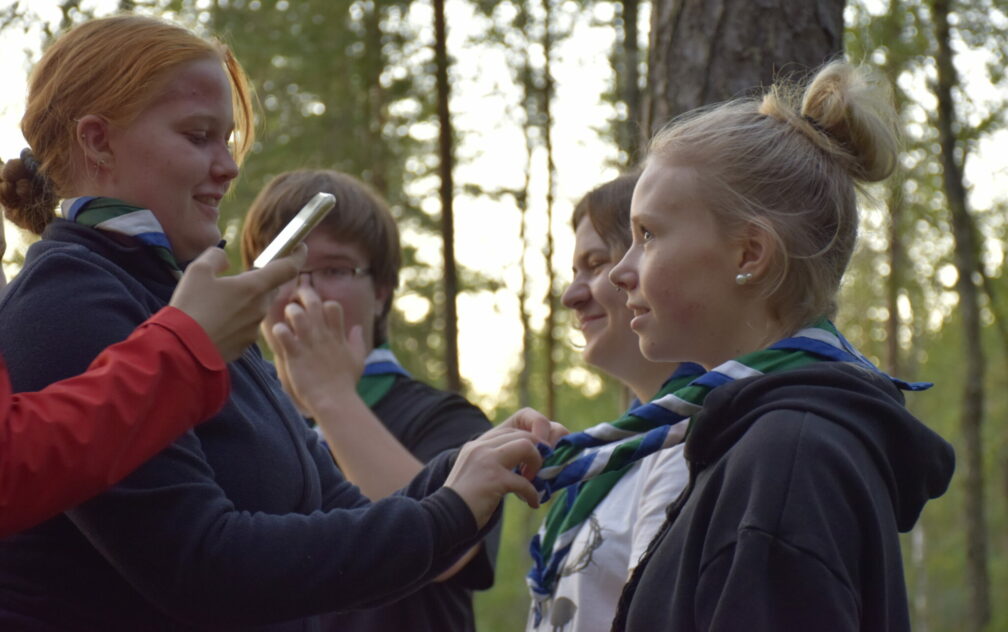
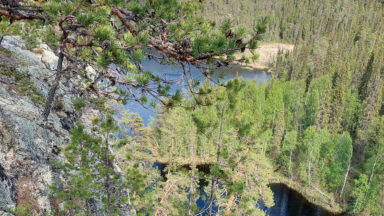
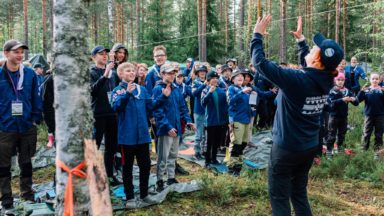
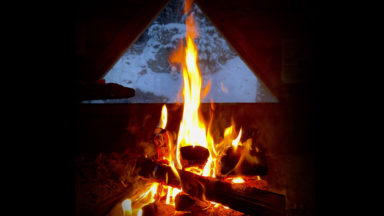
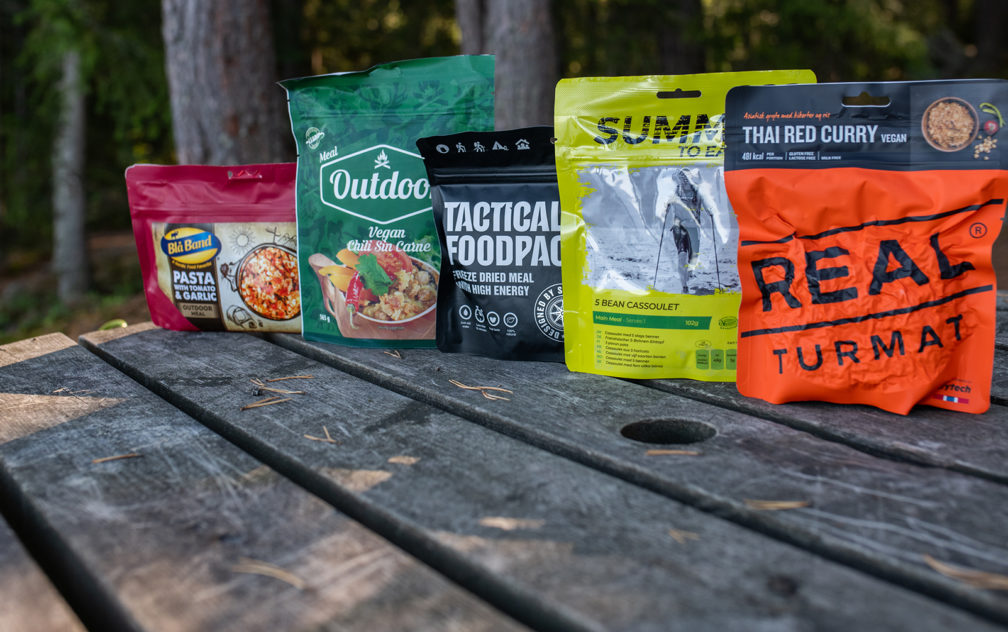
The Finnish food culture is influenced by Western and Eastern traditions. Nearness of the sea and thousands of lakes and the high share of forested land area in the country, approximately 70 percent, offer Finnish cuisine pure natural raw ingredients such as fish, berries and mushrooms but international meals like pizza are among favourites of children and youth as well. The school system provides a free warm daily meal for children which is internationally unique. Karelian pasties that have their origin in eastern part of the country are sold in almost every bakery and store. The scouts and guides eat the traditional Finnish buns often at the bonfire, wrapping a thin piece of the dough in a spiral form around an approximately 2 cm thick wooden stick of ca one meter length and baking it on an open fire.
Finnish recipes
Karelian Rice Pasties with Egg and Butter Spread
Makes about 25
Rice mixture:
500 ml water
2 tbsp butter
250 ml short-grain glutinous rice
1 litre milk
1 1/2 tsp salt
Rye dough:
400 ml rye flour
150 ml plain flour
1 tsp salt
200 ml water
To glaze:
50 g butter
100 ml milk
Egg and butter spread:
100 g butter
3 hard-boiled eggs, mashed
50 ml chopped parsley
Put the water and butter into a saucepan. Bring to the boil and stir in the rice. Simmer for 10 minutes, stirring occasionally. Add the milk and stir until boiling. Simmer for about 50 minutes, until the rice is done. Season with salt. Set aside to cool. Mix both flour, salt and water together. Knead it into a dough. Roll the dough on a floured surface until about 2 mms thick. Using a cutter, cut into circles of 8 cm
(3 in.) in diameter. Roll the circles into thin crusts. A pasta machine can also be used. Use some flour to help with the rolling. Fill the crusts with a thin layer of rice mixture. Turn 1 cm (0.4 in.) of the side to create an edge and pinch the edges. Bake the pasties at 300°C (570F) for 15-20 minutes. Brush with a butter and milk mixture and transfer to soften under greaseproof paper and a tea towel. Eat hot with egg and butter spread.
Egg and butter spread:
Mix the soft butter with eggs and parsley. Serve lukewarm.
Traditional Finnish Buns
500 ml milk
2 tsp salt
200 ml caster sugar
1 tbsp cardamom
1.2 – 1.4 litres of plain white flour
50 g fresh yeast
200 g butter or margarine
1 egg for glazing
Make sure that all the ingredients are at room temperature. Dissolve the salt, sugar, cardamom and fresh yeast into the warmed up milk. Set aside approx. 200 ml flour. It should be added at the very end. Knead the dough for a while to improve elasticity. Finally, add the soft butter or margarine and continue kneading until the dough is smooth. Add the rest of the flour, if necessary. When making small buns, the dough can be softer than when making a twist. Place the dough into a bowl, tightly covered with plastic and allow to rise until doubled. Shape into buns and/or twists. Brush the swollen buns with a beaten egg and sprinkle with coarse sugar, caster sugar and/or almond flakes. Bake the buns at 225°C (440F) for 10-15 minutes, and the twists at 200°C (400F) for 20-25 minutes, depending on the size.
Sauna
Sauna is a vital part of the Finnish culture. This hot room that is heated with woods in an oven covered with stones relaxes and relieves tension. The heath in sauna is normally between 70 to 100 degrees celsius and the humidity is high because of the habit of throwing water on the hot stones which makes the stay pleasant. Many scout camps include sauna in their programme. Many camp venues for scouts have a permanent sauna building, often by a lake or the sea, but sometimes a temporary one is built in a tent just for the time of the summer camp. It is a custom that boys and girls go to sauna separatelly and without swimming suits.
Previosly sauna has had many functions from smoking meat and drying grain but today it is used for cleaning and relaxation at social gatherings with friends, colleagues and with the family. The most houses, summer cottages and even appartments have their own sauna and it is estimated that there are
ca. 1,2 million saunas in Finland for the country's 5,3 million inhabitants.
Songs
There are many Finnish scout songs and singing in the forest at the bonfire is popular at summer camps. Here are some examples of internationally known songs in Finnish and Swedish, the two official languages of Finland. The World Song has been composed by Finland's most famous composer by the times Jean Sibelius. There are several different lyrics for the song but here below is the most common combination that is used today by Finnish scouts and guides.
Taps song in Finnish
Ilta saa, uinahtaa,
päivyt vetten ja metsien taa.
Tyynny vaan, luonas on Herra ain.
Tummenee, himmenee
tähti syttyvä tuikkielee.
Hetket lyö, hiljalleen saapuu yö.
Taps in Swedish
Dagen dör, skymning rår,
över skog, över berg, över hav.
Allt är ro, vila trygg. Gud är när.
The World Song ("Partiomarssi", "Scout march" in Finnish)
Tie selvä on ja marssi soi ja lippu hulmuaa.
Ei painumaan se joudakaan, ei toivo kuolla saa.
On määränpää, se yhdistää, kun käymme vierekkäin.
Maailmaa muu myös uudistuu ja laulaa näin ja laulaa näin.
Kun usko puhdas säihkyvä on, niin vuoret siirtää voi.
Tää sielun varmuus horjumaton ain sankareita loi.
Jos uskos hyvään, oikeaan vain syttyy uudestaan,
käy joukkohon ja horjuttaa, ei milloinkaan sua esteet saa.
(melody: Jean Sibelius, lyrics: Aale Tynni [1. refr.], Jalmari Finne [2. refr.])
The music for the song can be found through here.
The World Song in English
Our way is clear as we march on
And see! Our flag on high
Is never furled throughout the world
For hope shall never die!
We must unite for what is right
In friendship true and strong
Until the earth
In its rebirth
Shall sing our song! Shall sing our song!
Games
Here are examples of games that Finnish scouts and guides like to play. It is often difficult to know the exact origin of a game so you might know your own local version of the game already. Nevertheless, it is always fun to play together.
Mirror
One of the players faces a wall while others line up about 10-20 meters behind him or her. They then try to approach the one at the wall by creeping, walking or even running but the person at the wall can turn around at any time and then all players must remain still. If he or she sees even the tiniest movement of any player, that person's name is said aloud and must return back to the starting point and try again. The one touching the back of the person at the wall first wins the game and is the next one standing at the wall. This game is mainly played by younger clubscouts.
Slime and fairies
Half of the players are slime crawling on the floor and the others are fairies that tiptoe around the room waving their hands like ferries. When the slime people touch the fairies they become slime as well and must creep along the floor and touch the other fairies. The game ends when everyone has become slime and the floor is clean.
Wolf and lamb
In this game all players except two are standing in a large circle in pairs holding the hands of the partner. The two in the middle of the circle are the wolf and the lamb. The wolf chases the lamb like in a tag game by running after the lamb and trying to touch that. The lamb tries to rescue him- or herself by running to some of the pairs and grabbing the other persons arm. Then the one who was standing on the other side is now "a third wheel" so he or she must leave the place and therefore becomes a lamb who tries to escape from the wolf. If the wolf touches the lamb, they change roles. The previous lamb is now a wolf trying to catch the lamb. Players should remain inside the circle all the time. There are many changes of the lamb during one game and it should be quite quick and fun. The game ends when the leader of the game or the players decide to end it.